Nikkah vs Walima vs Barat: Pakistani Wedding Dress Codes Explained
Confused about what to wear to each Pakistani wedding event? We break down the dress codes for nikkah, barat, walima and mehndi so you always look perfectly dressed for every occasion.
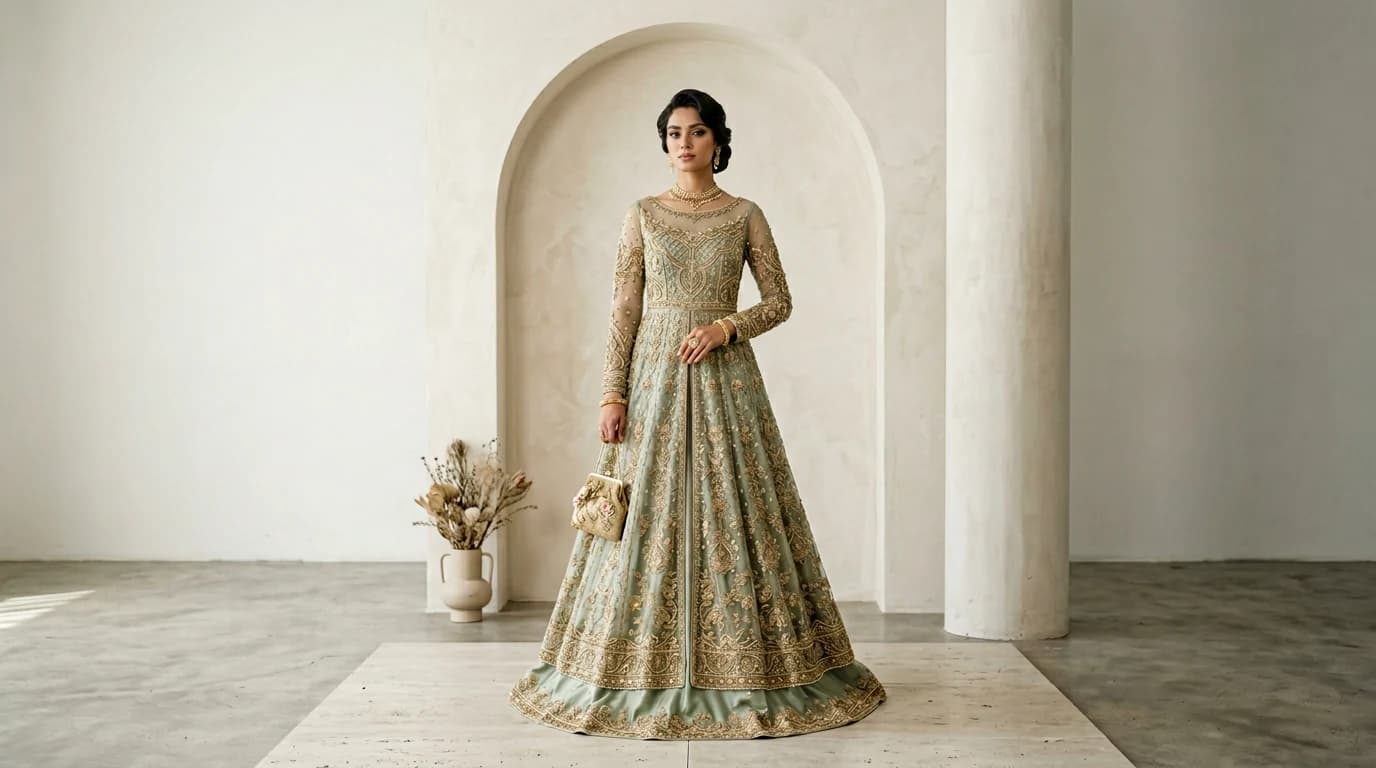
Pakistani weddings typically span multiple events, each with its own atmosphere, dress code and styling expectations. If you've ever wondered whether your lehenga is too formal for a mehndi or not formal enough for a nikkah, this guide is for you.
Mehndi: Colourful, Festive and Fun
The mehndi is a daytime or early-evening pre-wedding event. Dress code: festive, colourful and relatively relaxed. Bright colours are encouraged — yellow, mint, fuchsia, coral, orange. Light embroidery and flowing fabrics over heavy bridal pieces. Guests can wear lehengas, sharara sets or embroidered kameez with dupattas.
Formality level: Semi-formal. You do not need heavy jewellery or bridal-weight embroidery. The emphasis is on colour and energy, not grandeur.
Nikkah: Modest, Elegant and Spiritual
The nikkah is the Islamic marriage contract — often held at a mosque or a family home. Dress code: modest, elegant and slightly more formal than a mehndi. Covered arms and legs are important, especially for mosque ceremonies. A dupatta worn over the head is appreciated.
Colour palette: anything goes except very bright neon shades or overly casual pastels. Dusty rose, sage green, champagne, lavender and periwinkle are all excellent choices. Formality level: Smart occasion wear to formal, depending on the size of the event.
Barat: The Grand Wedding Night
The barat is the main wedding night — the groom's procession and the main reception. This is the most formal event in the Pakistani wedding calendar. Dress code: full bridal occasion wear. Heavy embroidery, rich fabrics (velvet, raw silk, organza), statement jewellery.
Guests should wear their best outfits. Deep jewel tones — emerald, burgundy, navy, deep plum — and rich gold embroidery are popular. Avoid very light, casual colours (these look washed out in evening venue lighting). Formality level: Black-tie equivalent in the Pakistani context.
Walima: Elegant and Polished
The walima is the reception dinner hosted by the groom's family, typically the day after the barat. Dress code: formal but slightly less intense than the barat. Pastel and muted tones come into their own at walima — ivory, champagne, soft blue, sage green.
Couture gowns, floor-length anarkalis and elegant lehengas with lighter embroidery all work well. The walima is often the most 'Instagram-friendly' event of the wedding week — soft colours photograph beautifully in natural and venue light. Formality level: Formal evening wear.
The Practical Summary
Mehndi: Bright colours, light fabrics, semi-formal. Nikkah: Modest, mid-formal, covered. Barat: Your most formal, heavily embroidered outfit in a deep jewel tone. Walima: Formal but softer — pastels, couture gowns, elegant lehengas.
When in doubt, go slightly more formal than you think necessary. In Pakistani wedding culture, being overdressed is far more acceptable than being underdressed.